Saturday Supercade: When Arcade Games Took Over Saturday Morning Cartoons
SATURDAY MORNING CARTOONS | OCTOBER 17, 2026
When Our Favorite Arcade Games Took Over Saturday Morning TV!
There was a time when Saturday morning was the most important appointment of the entire week. No school. No homework. No boss demanding a spreadsheet. Just a bowl of cereal big enough to feed a small family, a television set, and several glorious hours of animated insanity.
And in 1983, CBS decided that one of the biggest crazes sweeping America belonged on Saturday morning television.
Video games had invaded shopping malls, convenience stores, pizza parlors, and living rooms. Kids were spending their allowances feeding quarters into arcade cabinets, desperately trying to keep a frog alive or rescue a woman from a barrel-throwing gorilla.
So why not turn those games into cartoons?
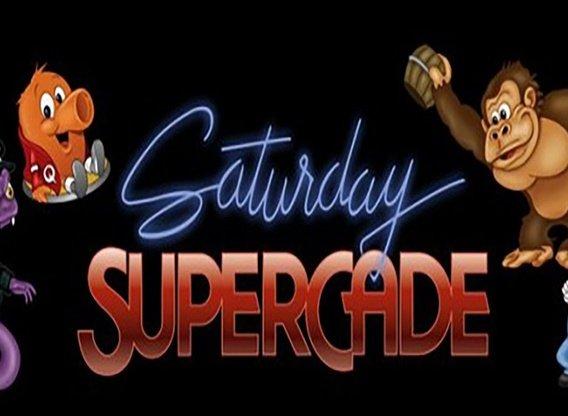
That wonderfully ridiculous idea gave us Saturday Supercade, one of the most fascinating forgotten experiments of the 1980s animation boom.
When the Arcade Invaded Saturday Morning Television
Premiering September 17, 1983, Saturday Supercade was produced by Ruby-Spears Productions, the animation company founded by Joe Ruby and Ken Spears. CBS assembled a collection of characters from popular video games and gave each a short animated adventure.
The original lineup included Donkey Kong, Donkey Kong Jr., Frogger, Q*bert, and Pitfall!. The last two alternated weeks during the first season.
Think about how strange that was. Most of these games barely had a story. Frogger crossed a road. Donkey Kong threw barrels. Q*bert jumped around a pyramid of cubes while avoiding enemies. Pitfall Harry swung over dangerous obstacles in search of treasure.
These were fantastic video games, but they weren’t exactly overflowing with television-ready scripts.
Fortunately, 1980s cartoon writers never allowed something as inconvenient as a lack of source material to get in the way of a perfectly good animated series.
They invented supporting characters, relationships, occupations, elaborate adventures, and entire fictional communities. The results ranged from surprisingly entertaining to gloriously absurd.
Donkey Kong: Before Mario Became Nintendo’s Greatest Hero
Today, Mario is arguably the most recognizable video game character on Earth. He has conquered everything from go-kart racing to feature films. But the Mario appearing in Saturday Supercade was a very different fellow.
Instead of rescuing Princess Peach, he spent his time pursuing Donkey Kong, who had escaped from the circus. Pauline accompanied Mario on his adventures, while the mischievous ape caused chaos wherever he went.
Donkey Kong wasn’t really the terrifying villain of the arcade game. He was more of an oversized, troublemaking fugitive who frequently found himself in ridiculous situations.
And here’s a piece of cartoon trivia worth remembering: Mario was voiced by Peter Cullen, the legendary voice actor who would become synonymous with Optimus Prime in The Transformers.
That’s right. Before generations of fans knew Cullen as the commanding voice of the Autobot leader, he was chasing an animated gorilla around on Saturday mornings.
Donkey Kong himself was voiced by entertainer Soupy Sales, adding another unusual piece to this wonderfully eccentric production.
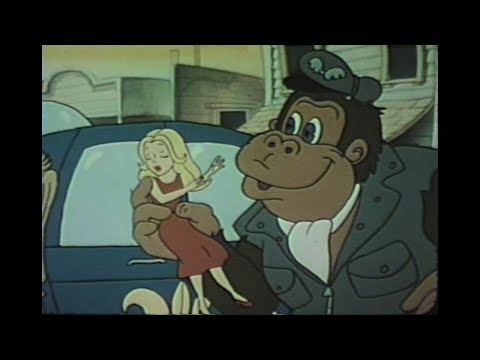
The Donkey Kong cartoons captured something special about early Nintendo history. This was a period before Mario’s personality, world, and supporting cast had settled into the familiar formula we know today.
Watching these shorts now is almost like discovering an alternate history of Nintendo, where Mario’s greatest ambition was simply getting one extremely stubborn ape back into captivity.
Frogger: From Crossing Highways to Breaking News
Of all the bizarre decisions made by the creative team, turning Frogger into a newspaper reporter might be the most entertaining.
In the arcade, Frogger had one basic objective: cross a dangerous highway, navigate a river, and get home without becoming a colorful smear on the pavement.
Apparently, that wasn’t enough material for a weekly cartoon.
So the animated Frogger became a reporter for The Swamp Gazette, investigating stories alongside his friends Fanny Frog and Shelly Turtle.
Suddenly, our favorite amphibian was chasing headlines instead of merely dodging automobiles.
Of course, the writers couldn’t completely abandon the game’s most recognizable feature. Frogger still found himself flattened by passing vehicles and involved in various unfortunate accidents, usually recovering through cartoon logic.
There was something genuinely charming about the concept. The show transformed a character with virtually no personality into a cheerful, accident-prone journalist with a supporting cast and a job to do.
Was it ridiculous? Absolutely.
Did we care when we were eight years old? Not one bit.
Q*bert: The Arcade’s Strangest Star Became a Teenager
If you remember Q*bert, you probably remember three things: the orange character with the enormous nose, the pyramid of colored cubes, and those mysterious symbols that appeared whenever he became frustrated.
For the cartoon, Ruby-Spears took that peculiar little creature and placed him in a 1950s-inspired community called Q*Berg.
Q*bert became a teenager dealing with school, friendships, romance, and bullies. Familiar arcade antagonists including Coily, Ugg, and Wrongway were reimagined as recurring troublemakers.
It was an unusual creative choice, but one that gave the writers a recognizable sitcom structure. Instead of watching Q*bert hop endlessly between cubes, audiences followed his everyday adventures in a colorful world populated by equally strange creatures.
The original game’s visual identity remained present, but the cartoon expanded the premise into something resembling a high-school comedy.
And somehow, it worked well enough for Q*bert to survive into the show’s second season.
Looking back, the segment is a perfect example of how aggressively the animation industry experimented with established properties during the 1980s. Give them a video game about hopping on cubes, and they would somehow find a way to turn it into teenage drama.
Pitfall Harry: From Atari Adventurer to Saturday Morning Treasure Hunter
Unlike most of the characters appearing in Saturday Supercade, Pitfall Harry came from the home-console phenomenon Pitfall!, rather than an arcade cabinet.
Released by Activision for the Atari 2600, the original game sent players swinging over crocodile-infested waters, jumping across hazards, and searching for treasure.
The animated version transformed Harry into a globe-trotting adventurer, accompanied by his niece Rhonda and a cowardly mountain lion named Quickclaw.
The obvious comparison was Indiana Jones, whose cinematic adventures had helped make treasure hunting fashionable in the early 1980s.
But this was Saturday morning television, so naturally the danger came packaged with wisecracks, comic mishaps, and a talking animal companion.
What makes the Pitfall segment particularly interesting is how much personality the cartoon added to a character who had previously existed primarily as a player-controlled adventurer.
For kids who had spent hours exploring the Atari jungle, the show provided a chance to imagine the larger world beyond the limited graphics of the original game.
That was part of the magic of early video game adaptations. The hardware gave us the basic idea. Our imaginations—and sometimes cartoon studios—filled in everything else.
Donkey Kong Jr.: A Son Searching for His Father
The first season also featured Donkey Kong Jr., who was searching for his missing father.
Accompanied by a human friend named Bones, Junior traveled through various adventures while continuing his search for the original Donkey Kong.
The premise was surprisingly sweet. Beneath the slapstick comedy and cartoon misadventures was a young character trying to reunite his family.
Frank Welker provided Junior’s voice, adding another legendary animation performer to the show’s cast.
Welker would become especially familiar to 1980s animation fans through his extensive voice work, including his performances as Megatron and Soundwave in The Transformers.
It’s remarkable how many voices associated with our favorite toy-driven cartoons also contributed to these relatively obscure arcade adaptations.
1984: New Games Enter the Supercade
When Saturday Supercade returned for its second season in September 1984, the lineup had changed.
Donkey Kong and Q*bert remained, but Frogger, Donkey Kong Jr., and Pitfall Harry were gone. Their replacements were Kangaroo and Space Ace.
Kangaroo drew inspiration from the arcade game of the same name, featuring a mother kangaroo and her adventures involving mischievous monkeys.
Space Ace, meanwhile, came from the spectacular laserdisc arcade game associated with animator Don Bluth. Its science-fiction setting, alien threats, and heroic adventures provided a noticeably different flavor from the other segments.
The second-season changes demonstrated just how closely the program followed the rapidly evolving video game market. As new games appeared, the producers had new characters to adapt.
Unfortunately, the show would not continue indefinitely. Its original CBS run ended in December 1984, leaving behind two seasons of peculiar and memorable arcade-inspired animation.
The Voice Acting Talent Was Absolutely Incredible
One of the most overlooked aspects of Saturday Supercade is its remarkable collection of voice performers.
We’ve already mentioned Peter Cullen as Mario and Frank Welker as Donkey Kong Jr., but the show also featured performers including Judy Strangis as Pauline, B.J. Ward as Fanny Frog, and Robert Ridgely as Pitfall Harry.
For animation enthusiasts, these names represent an extraordinary amount of television history.
The early 1980s animation industry was filled with incredibly versatile performers moving between productions, bringing characters to life with voices that would eventually become inseparable from our childhood memories.
And here they were, helping turn arcade mascots into Saturday morning personalities.
Why Saturday Supercade Still Matters
It’s easy to laugh at Saturday Supercade today. The premises were often ridiculous, the adaptations took enormous liberties with their source material, and the storytelling reflected the limitations of short-form children’s television.
But dismissing the series would overlook what made it so special.
Saturday Supercade captured a brief moment in American pop culture when video games still felt mysterious, revolutionary, and full of limitless possibilities.
We didn’t have endless YouTube walkthroughs, streaming libraries, or massive online databases explaining every character’s fictional history.
We had the arcade cabinet.
We had the instruction manual.
And we had our imaginations.
When a cartoon expanded those simple electronic adventures into a larger world, it gave us something we hadn’t experienced before. Characters who existed as tiny collections of pixels suddenly had voices, friendships, enemies, and entire lives beyond the screen.
There was also something wonderfully communal about the experience. Saturday morning cartoons weren’t just entertainment. They were part of a weekly ritual shared by millions of children.
We watched the same shows, laughed at the same jokes, and then headed outside to argue about which video game was the best.
For many of us, those arguments continued at the arcade, where another handful of quarters could settle absolutely nothing.
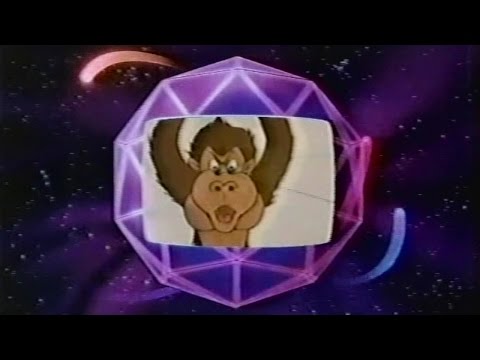
Watch the Original 1983 CBS Saturday Supercade Promo
Want to experience a little of that Saturday morning magic again? Here’s an archival CBS television promo advertising the series in 1983.
Watch the original Saturday Supercade CBS promo on YouTube.
One More Saturday Morning Before We Grow Up
Maybe Saturday Supercade wasn’t the greatest animated series of the 1980s. It certainly wasn’t as ambitious as some of the adventure cartoons that followed.
But that isn’t really the point.
The point is remembering what it felt like to wake up on Saturday morning with absolutely nothing on your schedule except cartoons, cereal, and the possibility of convincing your parents to take you to the arcade later that afternoon.
For one glorious hour, our favorite video game characters escaped their cabinets and joined us in our living rooms.
Donkey Kong was running wild. Frogger was chasing a headline. Q*bert was navigating teenage life. Pitfall Harry was searching for treasure.
And somewhere out there, a kid was sitting cross-legged on the carpet, watching every second, without realizing those mornings would someday become some of the memories he treasured most.
That’s what makes these old cartoons worth revisiting.
They don’t just remind us of what we watched.
They remind us of what it felt like to be a kid.
Now It’s Your Turn!
Do YOU remember watching Saturday Supercade on CBS?
Which segment was your favorite: Donkey Kong, Frogger, Q*bert, Pitfall Harry, Donkey Kong Jr., Kangaroo, or Space Ace?
And here’s the bigger question: Were the arcade games better than the cartoons?
Tell us in the comments, share your Saturday morning memories, and let us know which forgotten 1980s cartoon deserves the spotlight next!
For more classic cartoons, vintage toys, G.I. Joe, Transformers, and everything that made growing up in the 1980s unforgettable, follow Serpentor’s Lair!
Additional reading: Saturday Mornings Forever: Saturday Supercade | Saturday Supercade Episode Guide.